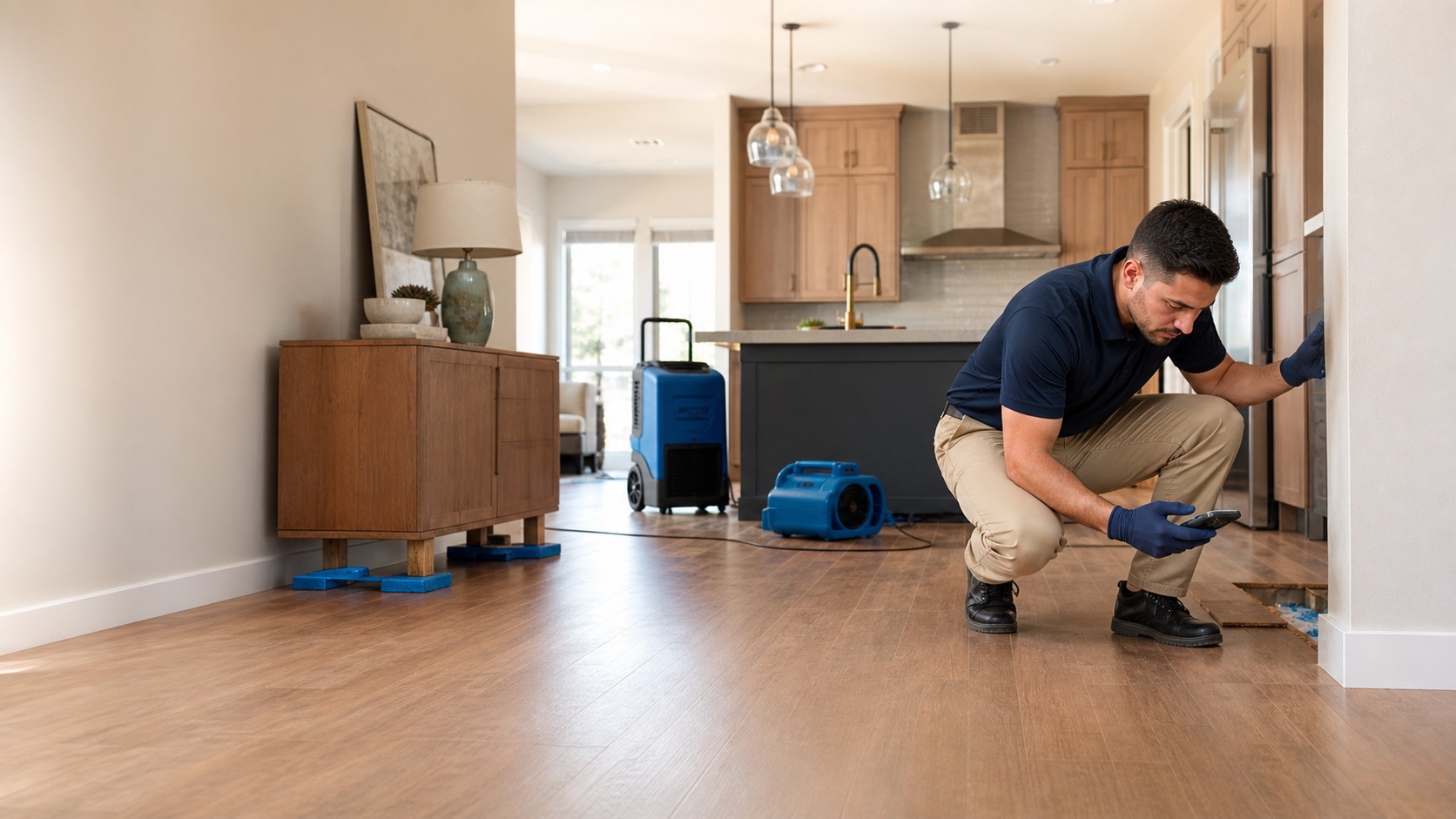
What needs assessment
Ask why the selected equipment suits the affected space and whether the condensate discharge is secure. Air movement may help evaporation, but moisture still needs to leave the building environment. Equipment placement must preserve safe routes and electrical use.
Three points to discuss
- Equipment capacity
- Condensate discharge
- Material response
Drying and material decisions
The provider should assess how room conditions and material readings change and adjust the setup when needed. A household dehumidifier is not evidence that a concealed assembly is drying sufficiently. Ask for monitored progress tied to the affected materials.
Property context
Planning the work in Plano
A Plano drying plan should explain which floor and wall layers are wet and how equipment reaches them. The absence of standing water does not show whether moisture persists beneath a finished floor. If the loss followed runoff entry, review the city flood-information resource for longer-term questions while the provider assesses cleanup and remaining materials.
Plano provides a public flood-information program through its Engineering Department. For stormwater questions, use the property address when reviewing city or FEMA resources; a neighborhood name alone does not establish the risk at a home. For an indoor release, the source and the affected floor and wall assemblies still determine the restoration scope.
Questions about this work
Does a lower humidity reading prove walls are dry?
No. Air conditions and moisture within materials are different measurements.
What should I prepare before calling about this work in Plano?
Give the exact address, the suspected source, the discovery time, affected rooms or levels, source repairs already completed, and any safety or access restrictions. Ask the responding provider to confirm current availability and the proposed initial scope.
How will I know when the affected materials are ready for repairs?
Ask for the final moisture or condition findings and the reasons supporting drying completion, cleaning, or removal. Any source problem or inaccessible area should be explained before finishes conceal the assembly again.
Sources and further guidance
Prepared October 7, 2026. General information; the proposed work should follow the conditions found at your property.