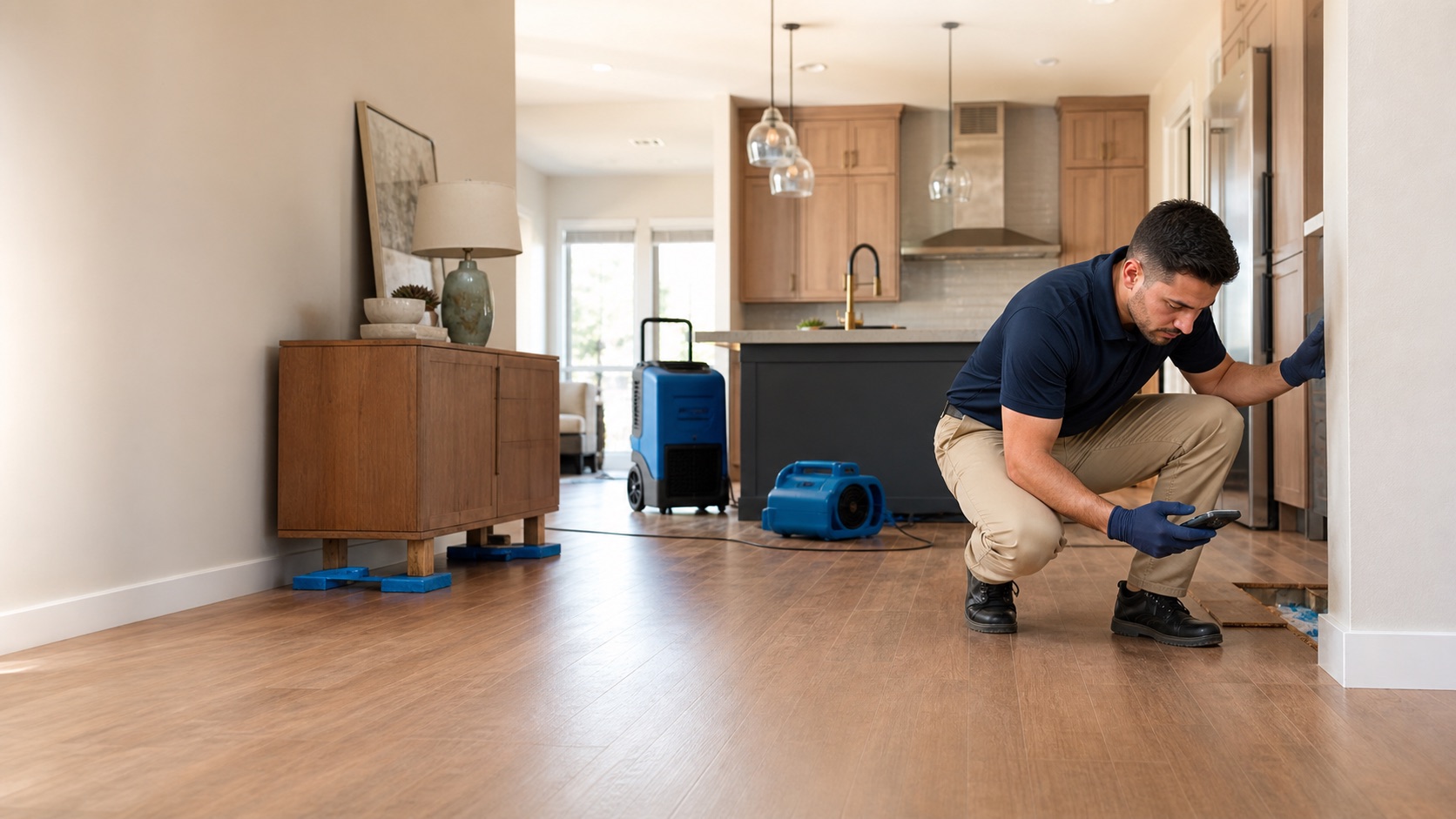
What needs assessment
Report recurring odor, soft trim, staining, lifted flooring, or cabinet swelling. Compare new changes with older photos if available. A plumber or appropriate building specialist needs to diagnose the leak, while restoration inspection defines the materials affected over time.
Three points to discuss
- Repeated stains or odor
- Leak history and repairs
- Hidden material condition
Drying and material decisions
Ask whether the scope distinguishes fresh water from earlier deterioration. Some porous materials may no longer be suitable for drying in place. Closing a wall or replacing a finish should wait until the source is resolved and the remaining structure meets the drying plan.
Property context
Planning the work in Plano
For a Plano loss, separate a supply or appliance release from water entering after rain. The distinction affects who repairs the source and what the cleanup must address. A plumbing release can travel beneath a kitchen or bathroom floor even when the property is outside a mapped floodplain. Explain the source you observed, rather than choosing a cleanup category from the weather alone.
Plano provides a public flood-information program through its Engineering Department. For stormwater questions, use the property address when reviewing city or FEMA resources; a neighborhood name alone does not establish the risk at a home. For an indoor release, the source and the affected floor and wall assemblies still determine the restoration scope.
Questions about this work
Why does exposure history matter?
Longer exposure can change material condition, contamination concerns, and the feasibility of drying or cleaning the assembly.
What should I prepare before calling about this work in Plano?
Give the exact address, the suspected source, the discovery time, affected rooms or levels, source repairs already completed, and any safety or access restrictions. Ask the responding provider to confirm current availability and the proposed initial scope.
How will I know when the affected materials are ready for repairs?
Ask for the final moisture or condition findings and the reasons supporting drying completion, cleaning, or removal. Any source problem or inaccessible area should be explained before finishes conceal the assembly again.
Sources and further guidance
Prepared October 7, 2026. General information; the proposed work should follow the conditions found at your property.