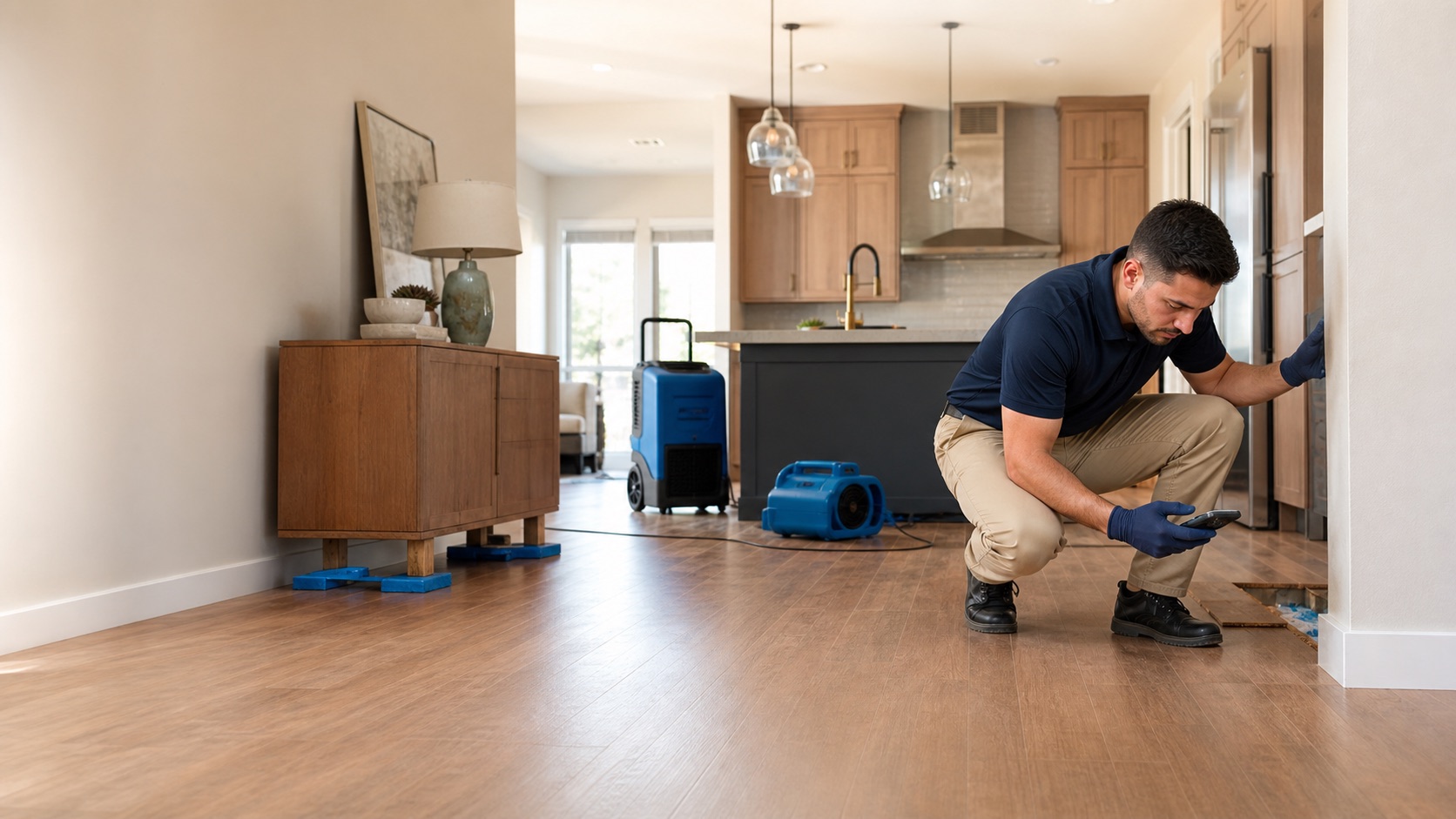
What needs assessment
Provide prior repair records, earlier photographs, and the timing of each event. Describe whether the recurrence follows rain, appliance use, or another pattern. The provider should distinguish old material deterioration from newly affected areas.
Three points to discuss
- Previous repair records
- Recurring trigger
- Post-repair moisture findings
Drying and material decisions
Ask what evidence confirms the source correction and whether a different trade needs to investigate. Moisture checks after the repair help establish whether the assembly is stabilizing. A new restoration scope should explain why this attempt addresses the conditions that remained previously.
Property context
Planning the work in Plano
Keep the Plano source-repair record with the photos and moisture findings. For runoff-related entry, an address-based city or FEMA review can inform later prevention planning. For an appliance or plumbing event, ask the relevant trade how the failed connection was tested. These records help connect immediate mitigation to the repairs actually needed.
Plano provides a public flood-information program through its Engineering Department. For stormwater questions, use the property address when reviewing city or FEMA resources; a neighborhood name alone does not establish the risk at a home. For an indoor release, the source and the affected floor and wall assemblies still determine the restoration scope.
Questions about this work
What makes a repeat loss different from the first one?
The history can reveal an unresolved source, concealed damage, or a repair that did not address the original pathway.
What should I prepare before calling about this work in Plano?
Give the exact address, the suspected source, the discovery time, affected rooms or levels, source repairs already completed, and any safety or access restrictions. Ask the responding provider to confirm current availability and the proposed initial scope.
How will I know when the affected materials are ready for repairs?
Ask for the final moisture or condition findings and the reasons supporting drying completion, cleaning, or removal. Any source problem or inaccessible area should be explained before finishes conceal the assembly again.
Sources and further guidance
Prepared October 7, 2026. General information; the proposed work should follow the conditions found at your property.